

Geotextile Container Installation Guide
Successful geotextile container performance starts long before pumping begins.
Most failures—rolling, rupture, poor dewatering, seam stress, and stacking issues—are not caused by the container itself, but by incorrect site preparation, poor deployment, or improper filling practices.
At Kontain, we work closely with asset owners, dredging contractors, wastewater operators, mining projects, and civil contractors to help ensure geotextile container systems are designed, positioned, and operated correctly from day one.
While we do not perform installation works directly, we provide the technical guidance that helps projects avoid costly mistakes and achieve reliable long-term performance.
Site Preparation Matters Most
A properly prepared pad is critical.
The foundation must be level, compacted, and capable of supporting the full load of the filled container while allowing effective drainage and filtrate management.
Poor subgrade preparation is one of the leading causes of:
-
tube rolling
-
seam overstress
-
overfilling failures
-
poor stacking stability
-
reduced dewatering efficiency

Correct Deployment Prevents Failure
Geotextile containers must be positioned accurately before filling begins.
Centreline marking, correct spacing, fill port orientation, and proper alignment all affect final performance—especially for stacked systems.
A poorly aligned tube may appear minor during deployment, but can create major structural issues during filling and dewatering.
This is particularly critical for:
-
sludge dewatering projects
-
mine tailings containment
-
dredging operations
-
ash pond remediation
-
stacked geotextile container systems

Filling Is the Highest Risk Stage
Incorrect hose setup, poor polymer dosing, overfilling, or uncontrolled pumping pressure can quickly lead to rupture.
Maximum fill height must always be controlled, and operators must understand how the container behaves during early-stage filling.
This is where experience matters most.
Small mistakes during priming often become major failures later.

Common Failures We Help Prevent
Many projects call us only after failures begin.
Typical issues include:
-
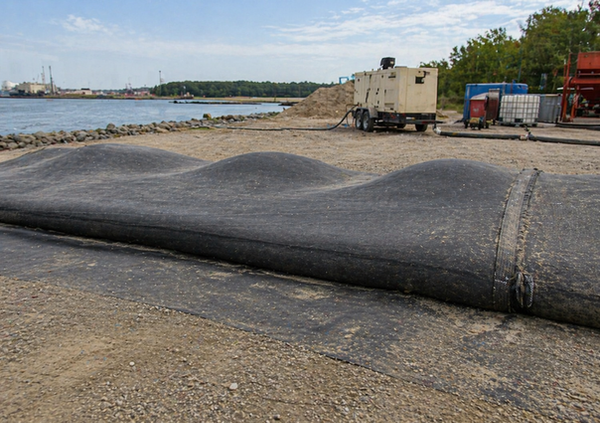
camel hump formation (photo below)
-
tube rolling
-
seam burst
-
overfilling rupture
-
poor stacking collapse
-
subgrade rutting
-
puncture
-
uneven dewatering and instability
Most of these problems are preventable with correct planning and technical oversight.
Working With Your Installation Team
Kontain supports project success by working alongside:
-
asset owners
-
engineering consultants
-
dredging contractors
-
dewatering specialists
-
wastewater operators
-
civil contractors
-
mine operators
We help review layout strategy, filling approach, stacking configuration, polymer considerations, and failure prevention planning—before problems become expensive.